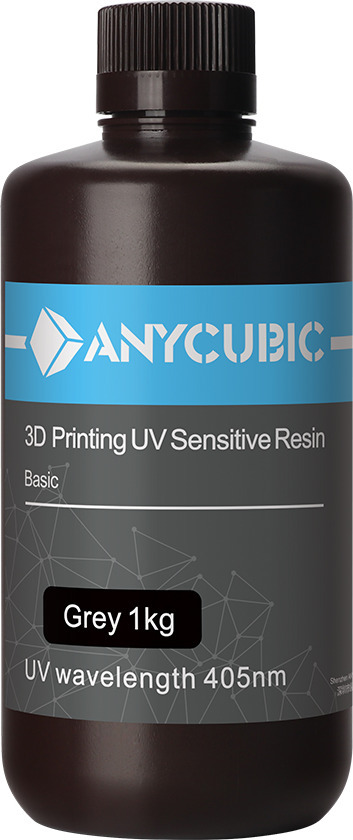
Many consumers prefer Anycubic’s regular UV resin because it ensures the strength of the molded parts and minimizes excessive shrinkage, while also improving print speed, shortening curing time, and maximizing the printing efficiency of LCD machines.
Regular UV resin
The material is rigid and tough. The strong material of the shovel model can easily lead to the model shattering, but overly flexible material is susceptible to deformation or fracture details during printing, which affects the accuracy and aesthetics of the molding. The resin is stable in various climate conditions and is also easy to store, overcoming the shortcomings of other resins.
Professional LCD molding resin
The optimization of the weak light source formation and printing efficiency of LCD is higher than that of the market-compatible DLP/LCD/SLA resins. This resin is designed solely for LCD models and is not recommended for DLP or SLA machines. This resin ensures the strength of the molded parts and minimizes excessive shrinkage while also improving print speed, shortening curing time, and maximizing the printing efficiency of LCD machines.
Strong adhesion and easy to detach
In addition to a high success rate of printing and precision, it also minimizes the release force and adhesion of the resin, allowing the model attached to the molding platform to be easily scooped off, and the low viscosity facilitates the cleaning of the machine and the model.
Storage method:
Store at room temperature protected from light (sunlight contains a lot of UV light, which solidifies the light-sensitive resin. After testing, light does not affect if it is not UV light). It is recommended to store at a temperature of 15 -35 ; the lower the temperature, the higher the viscosity of the resin. A closed storage space, excessive dust, or humidity can affect print quality. Sunlight contains a lot of UV light, which solidifies the light-sensitive resin.
Usage:
| Country of Origin | China |
|---|---|
| PID | 932647 |
| Electronic address of single contact point | |
| Manufacturer address | Room 101-505, Building No. 11, Yinhai Industrial Park, LongGang District, ShenZhen, China |
| Manufacturer's email address | |
| Manufacturer name | Shenzhen Anycubic Technology Co., Ltd |
| EU Responsible Person | Lucy |

Many consumers prefer Anycubic's regular UV resin because it ensures the strength of the molded parts and minimizes excessive shrinkage, while also improving print speed, shortening curing time, and maximizing the printing efficiency of LCD machines.
Regular UV resin
The material is rigid and tough. The strong material of the shovel model can easily lead to the model shattering, but overly flexible material is susceptible to deformation or fracture details during printing, which affects the accuracy and aesthetics of the molding. The resin is stable in various climate conditions and is also easy to store, overcoming the shortcomings of other resins.
Professional LCD molding resin
The optimization of the weak light source formation and printing efficiency of LCD is higher than that of the market-compatible DLP/LCD/SLA resins. This resin is designed solely for LCD models and is not recommended for DLP or SLA machines. This resin ensures the strength of the molded parts and minimizes excessive shrinkage while also improving print speed, shortening curing time, and maximizing the printing efficiency of LCD machines.
Strong adhesion and easy to detach
In addition to a high success rate of printing and precision, it also minimizes the release force and adhesion of the resin, allowing the model attached to the molding platform to be easily scooped off, and the low viscosity facilitates the cleaning of the machine and the model.
Storage method:
Store at room temperature protected from light (sunlight contains a lot of UV light, which solidifies the light-sensitive resin. After testing, light does not affect if it is not UV light). It is recommended to store at a temperature of 15 -35 ; the lower the temperature, the higher the viscosity of the resin. A closed storage space, excessive dust, or humidity can affect print quality. Sunlight contains a lot of UV light, which solidifies the light-sensitive resin.
Usage: